
Jewelry prices vary widely because materials, craftsmanship, and retail positioning influence production costs. Traditional fine jewelry often contains solid precious metals and natural gemstones, while affordable-luxury alternatives use different materials to achieve similar appearances at lower prices. Understanding these differences helps consumers decide whether a higher purchase price offers meaningful long-term value.
Affordable-luxury collections demonstrate how material choices affect pricing. For example, Aqua Gold pieces include jewelry featuring moissanite, sterling silver, and plated metals. These materials provide alternatives to traditional diamond and solid-gold designs. However, affordability alone does not determine value. Buyers must consider durability, maintenance, personal preferences, and potential resale opportunities.
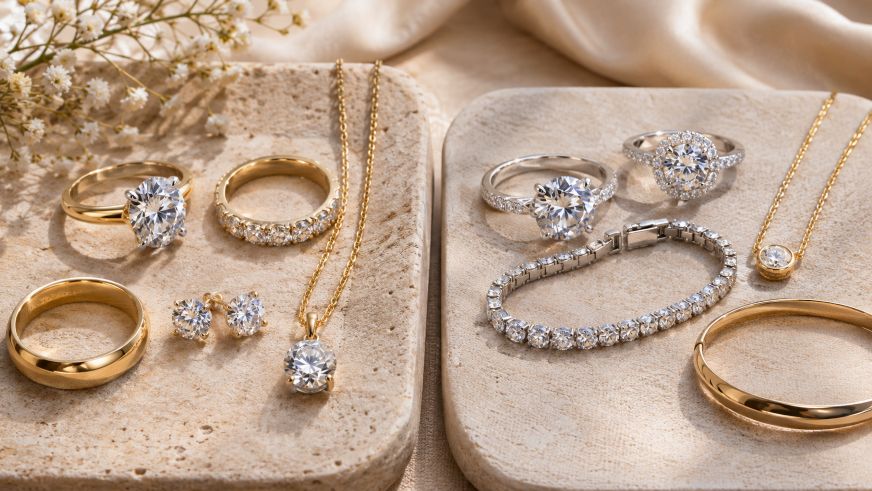
What Makes Traditional Fine Jewelry More Expensive?
Traditional fine jewelry generally uses precious metals such as gold and platinum, alongside natural gemstones. Their costs reflect raw materials, processing, manufacturing, and distribution.
The Gemological Institute of America (GIA) explains that diamond prices depend on four characteristics: cut, color, clarity, and carat weight. Rarity also influences pricing, particularly for larger natural diamonds with desirable qualities.
Gold jewelry follows another pricing structure. Its value depends partly on metal weight, purity, and prevailing gold prices. An 18-karat gold item contains 75% gold, while 14-karat gold contains approximately 58.3%.
Manufacturing and branding contribute additional costs. Handcrafted settings, detailed finishing, quality inspections, packaging, advertising, and retail operations can increase the final price.
Consequently, two visually similar rings may have significantly different prices without necessarily offering the same material value.
Natural Diamonds or Moissanite: Which Offers Better Value?
Natural diamonds remain associated with traditional fine jewelry because of their geological origin, hardness, and established jewelry market. Moissanite offers a different approach, emphasizing visual brilliance and affordability.
How Their Physical Properties Compare
Research from the GIA shows that diamonds measure 10 on the Mohs hardness scale, while moissanite measures approximately 9.25. Both resist everyday scratching, although neither is completely immune to damage.
Moissanite also produces more colorful flashes of light than diamond. Its optical properties create a distinctive sparkle that some consumers prefer.
Most importantly, moissanite used in modern jewelry is laboratory-created. Its production differs fundamentally from the geological processes responsible for natural diamonds.
Purchase Price and Resale Potential
Moissanite generally costs substantially less than a comparable natural diamond. This allows buyers to choose larger stones or elaborate settings without paying for natural rarity.
Natural diamonds may attract more interest in established secondhand jewelry markets. However, this does not guarantee that owners will recover their original purchase price.
The GIA recommends obtaining a fair-market-value appraisal when selling jewelry. Actual resale offers depend on gemstone quality, market demand, and buyer preferences.
For consumers focused primarily on appearance and everyday wear, moissanite may provide sufficient value. Natural diamonds may better suit buyers who prioritize geological origin, tradition, or particular collectible characteristics.
Solid Gold vs. Gold-Plated Jewelry: What Changes Over Time?
Gold jewelry presents another important financial comparison. Solid-gold alloys and gold-plated products can look similar when new, but their long-term characteristics differ.
Why Solid Gold Costs More Initially
Solid-gold jewelry contains gold throughout its metal structure. Its precious-metal content contributes directly to its material value.
The Federal Trade Commission (FTC) advises consumers to examine karat markings when evaluating gold jewelry. These markings indicate the proportion of pure gold within the alloy.
Although solid-gold pieces require cleaning and occasional repairs, their appearance can often be restored through professional polishing or refinishing.
Where Gold Plating Falls Short
Gold-plated jewelry contains a thin gold layer applied over another metal. This construction reduces the amount of gold required and generally lowers the initial cost.
However, the FTC explains that plating eventually wears away. Its lifespan depends on coating thickness, wearing habits, and exposure to everyday conditions.
Replating or replacing frequently worn items may therefore increase ownership costs over time.
Nevertheless, plated accessories remain practical for occasional wear, changing fashion preferences, or buyers who prefer lower initial spending.
Why Sterling Silver Deserves Consideration
Sterling silver occupies a useful position between inexpensive base-metal accessories and higher-priced gold jewelry.
The FTC identifies sterling silver as an alloy containing 92.5% pure silver. Jewelry commonly displays a 925 marking to indicate this composition.
Silver offers genuine precious-metal content without requiring the same financial commitment as comparable solid-gold jewelry. However, it can tarnish and may require periodic polishing.
Rhodium-plated sterling silver can offer additional surface protection, although its coating may eventually need renewal.
Unlike ordinary costume jewelry, sterling silver also retains some underlying precious-metal value. Nevertheless, resale proceeds depend on weight, condition, and silver-market prices.
How Manufacturing and Retail Markups Affect Pricing
Material quality explains only part of jewelry pricing. Production techniques and business models also influence what consumers pay.
Mass production can reduce manufacturing costs through standardized designs and larger production quantities. Handmade jewelry may require more labor, particularly when settings involve detailed finishing.
Retailers must also account for transportation, staffing, marketing, insurance, and operating expenses. Brand recognition can support higher prices when consumers associate particular designers with exclusivity or craftsmanship.
However, a higher retail markup does not automatically indicate superior durability or resale value.
Buyers should therefore compare material specifications alongside workmanship, warranty coverage, and seller policies.
When Does Paying More Make Financial Sense?
Higher-priced jewelry may be financially reasonable when an item will receive frequent use or remain in a family for generations.
Solid-gold rings, for example, may justify their initial cost when buyers expect decades of wear and occasional professional maintenance. However, jewelry should not automatically be treated as an investment.
Consumers interested in preserving wealth through precious metals may also explore gold bars as an investment for financial stability. Unlike jewelry, investment-grade gold bars are generally valued more directly according to their gold content and prevailing market prices, although dealer premiums, storage expenses, and selling costs still affect overall returns.
Conversely, less expensive materials may satisfy consumers purchasing accessories for special occasions or experimenting with new styles.
Before deciding, buyers should consider several questions:
- How frequently will the jewelry be worn?
- What materials and gemstones does it contain?
- Will cleaning, repairs, or replating create additional expenses?
- Does the purchase fit comfortably within the available budget?
- Is resale value important, or is personal enjoyment the main priority?
These questions shift attention from retail prices toward realistic ownership costs.
Understanding Value Beyond the Price Tag
Affordable luxury and traditional fine jewelry serve different financial priorities. Neither category automatically provides better value for every buyer.
Natural diamonds and solid gold may appeal to consumers seeking precious-material content, established traditions, and long-term ownership. Moissanite, sterling silver, and plated alternatives can meet practical needs at lower initial prices.
Ultimately, informed jewelry purchases begin with understanding gemstone identity, metal purity, coating specifications, and maintenance requirements. As material options continue expanding, comparing these details will remain more useful than judging jewelry solely by appearance, branding, or retail price.